
AI + Custom Software for Education
Build a better business around learning.
In education, the digital experience shapes how people find the right opportunity, decide to participate, access learning, get support, complete requirements, and decide whether to come back.
Think It First builds AI solutions for education, custom education software, learning platforms, learner portals, search and recommendation experiences, workflow automation, integrations, dashboards, and digital education products around the systems and business model you already have.
That helps the right learner find the right program, removes friction from registration and enrollment, and shows which experiences drive completion, retention, and revenue.

Common education problems
Common AI and automation opportunities in education
The learning experience has to work before, during, and after someone enrolls.
Discovery, Registration, and Enrollment
You have the right program, course, or credential. The learner still has to find it.
Prospective learners may arrive with a career goal, professional requirement, topic of interest, schedule constraint, experience level, or problem they want to solve, described in their own words. Once they find the right offering, registration, applications, payment, documentation, prerequisites, and enrollment can introduce another layer of friction.
We build AI course search, program discovery, semantic search for education, course recommendation experiences, education eCommerce, registration automation, enrollment automation, and guided learning discovery that help people move from intent to the right opportunity. For institutions, that can support program discovery and admissions. For continuing education, certification, and training businesses, it can help turn a complex catalog into a more effective digital product and conversion path.
Learning, Engagement, and Retention
Getting someone enrolled is one conversion. Giving them a reason to come back is another.
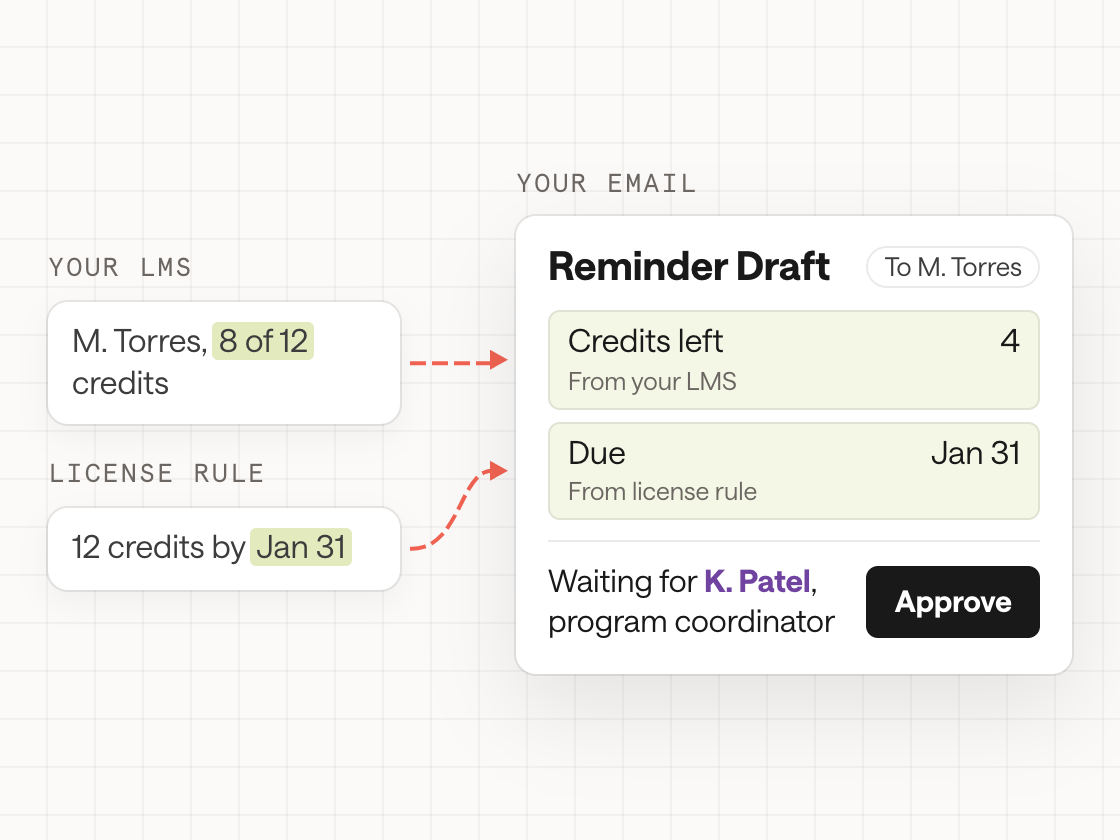
The learning experience continues after registration. Learners need to find content, understand progress, track requirements, access certificates or credentials, discover what to take next, and receive useful reminders or recommendations.
We build personalized learning software, AI learning recommendations, learner engagement experiences, continuing education tracking, CE dashboards, credential experiences, education portals, and retention workflows around learner behavior and product data. The objective can be completion, repeat purchase, renewal, membership value, continuing-education compliance, or simply making a learning product useful enough that people want to return.
Education Operations & Connected Data
Your staff should not be the integration between the systems delivering the learning experience.
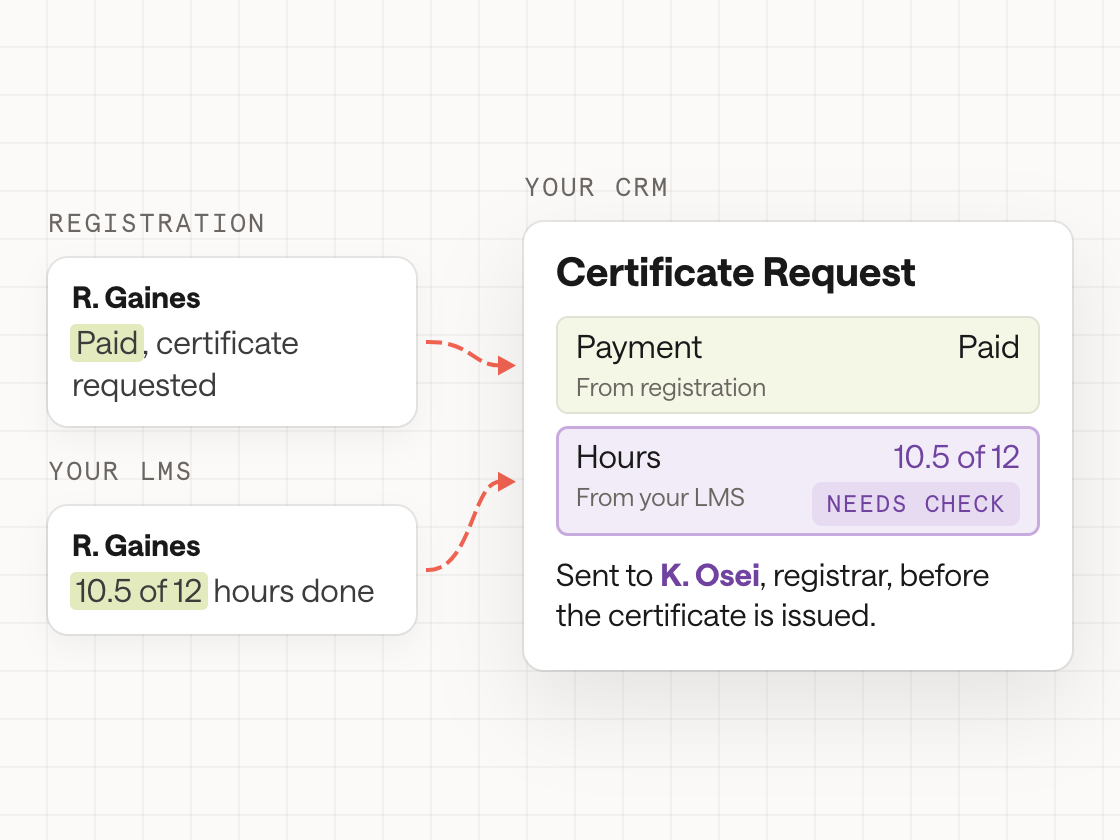
Learning organizations frequently depend on a mix of LMS, CRM, SIS, eCommerce, registration, certification, payment, email, analytics, event, and custom systems. When those platforms do not share the right information, people export files, reconcile records, duplicate data, manually issue credentials, rebuild reports, and answer questions that the system should already understand.
We build education workflow automation, LMS integration, SIS integration, education CRM integration, education eCommerce integration, data synchronization, document automation, and operational dashboards that move information between systems and make the full learner journey easier to manage.
Education digital transformation
Where AI and custom software fit in education
The education technology stack changes dramatically depending on the business. A university may center on an SIS, CRM, LMS, and advising environment. A continuing education company may behave more like an eCommerce business with courses, events, memberships, credentials, and repeat customers. A certification provider may care most about requirements, assessment, progress, renewal, and records. We start with the learning and business model.
AI Search, Program, and Learning Discovery
Build AI course search, semantic search, program discovery, learning-content search, course recommendation engines, guided pathways, and conversational learning discovery around the way people actually describe their goals. Search can combine subject matter, prerequisites, professional requirements, learner history, format, schedule, product metadata, and other relevant context to help people find what fits.
Registration, Enrollment, and Commerce Automation
Connect the steps between interest and participation through education registration automation, enrollment workflows, education eCommerce, payment integration, application workflows, document processing, membership logic, subscriptions, and learner-account automation. The implementation can support a university application, a paid CE course, a conference, a credential, a training program, or another learning product, each with its own path.
Personalized Learning, Engagement, and Retention
Use learner history, progress, content, requirements, preferences, and behavioral signals to create personalized learning experiences, AI learning recommendations, learner engagement tools, CE tracking, credential tracking, progress dashboards, reminders, re-engagement workflows, and next-best-course recommendations. For commercial education products, the same intelligence can support repeat purchase, renewal, cross-sell, and learner lifetime value.
Learner Support, Advising, and Self-Service
Build AI learner support, education AI assistants, student self-service, policy and resource search, course support, certification-requirement search, scheduling tools, and intelligent routing around approved information. Routine questions can be resolved quickly while situations involving academic, financial, credentialing, or other consequential decisions can move to the appropriate person.
LMS, SIS, CRM, Commerce, and Platform Integration
Connect the platforms responsible for learning and the business around it through LMS integration, SIS integration, education CRM integration, education platform integration, eCommerce integration, APIs, middleware, and data workflows. The architecture should reflect the organization: institutional systems for higher education, commerce and membership systems for CE providers, or a completely custom combination for a digital learning product.
Custom Education Platforms, Portals, and Intelligence
When the learning model does not fit an off-the-shelf product, our education software development work can include learner portals, student portals, continuing education platforms, certification systems, member experiences, custom learning products, administrative applications, engagement dashboards, education analytics, reporting tools, and digital experiences built around the organization itself.













How we work with education organizations
A learning organization is rarely one workflow.
We may need to follow how someone discovers a course, registers, pays, receives access, completes learning, earns a certificate, and decides what to take next. In another organization, we may follow a prospective student from program research through enrollment, or watch staff reconcile records between an LMS, CRM, SIS, event platform, and spreadsheet. We work within and around those systems, from Blackboard and Moodle to Slate and Ellucian Colleague.
Discovery can include learner journeys, registration and enrollment, content delivery, customer or student support, certification and CE requirements, product management, analytics, marketing handoffs, staff workflows, reporting, and the systems underneath them.
For organizations within traveling distance, we can work on site, observe the process directly, and hold workshops with the people doing the work. Then we determine what should be easier to find, what can be automated, which systems should exchange information, where human judgment matters, and where custom education software or an AI layer can improve both the learner experience and the operation behind it.
Learning data, judgment, and control
Better learning technology still has to work from the right information.
Course availability, program requirements, learner progress, credits, credentials, pricing, policies, records, and account information can all affect what a learner should see or what staff should do next. AI can make those systems easier to navigate, but useful automation still depends on clear sources, appropriate access, and deliberate boundaries.
Keep learning and product data grounded
Search, recommendations, assistants, and automation should work from current course, program, content, schedule, requirement, pricing, credential, and policy information. We design around the systems that remain authoritative so an AI experience does not invent a prerequisite, deadline, credit value, product detail, or learner requirement.
Protect learner information
Education environments may contain student records, customer information, learning history, payment data, assessments, or other sensitive information. We design integrations and AI experiences around appropriate permissions, data boundaries, and the privacy and security requirements that apply to the organization.
Keep people in consequential decisions
Some education workflows are administrative; others affect admission, academic standing, financial aid, accommodations, credentialing, assessment, or other meaningful outcomes. AI can retrieve information, prepare context, and support decisions while the appropriate person remains accountable where human review is required.
Measure the outcomes that matter
The right metric depends on the learning model. That may mean enrollment, registration conversion, completion, engagement, repeat purchase, renewal, learner lifetime value, CE completion, support volume, staff capacity, or retention. We design around the business outcome rather than treating AI usage itself as evidence of success.
Education technology can involve student records covered by FERPA, accessibility requirements, institutional policies, and payment information. Requirements vary by organization and use case, and your own team owns those decisions. Before sensitive information becomes part of an AI workflow, we list which records a project would touch, who has access, and where review is needed.
FAQ
AI for education: common questions
How is AI used in education outside the classroom?
Much of the opportunity sits around learning rather than inside it. AI can help prospective learners find the right program through course search and recommendations, answer routine questions from approved policies, track CE and credential requirements, and suggest what to take next. On the operations side, it can cut the exports and record reconciliation staff do between the LMS, CRM, SIS, and registration systems, so they can spend more time with learners.
Can you integrate our LMS with our CRM, SIS, or eCommerce platform?
Yes. LMS integration, SIS integration, education CRM integration, and eCommerce integration are common parts of the work. APIs, middleware, and data workflows move registrations, progress, completions, and credentials between systems such as Canvas, Moodle, Thinkific, Slate, Ellucian Banner, Salesforce Education Cloud, and WooCommerce, so staff stop acting as the integration layer. The design follows your model: a university, a CE provider, or a training business.
Do you work with continuing education and certification providers, or only schools?
Both. A continuing education company often behaves like an eCommerce business, with courses, events, memberships, credentials, and repeat customers. A certification provider may care most about requirements, progress, renewal, and records. A university may center on its SIS, CRM, LMS, and advising. We start with the learning and business model, then build registration automation, CE tracking, learner portals, or search around it.
How do you handle student records and FERPA in an AI project?
Education data can include student records covered by FERPA, payment information, assessments, and other sensitive information. Discovery lists which records a project would touch, which system owns them, and who has access today. Your institution’s own controls and policies apply, and its team owns its FERPA decisions. We set the access and review rules with you before sensitive information becomes part of an AI workflow.
Can an AI assistant answer student and learner questions?
Yes, for routine questions grounded in approved information. A learner support assistant can search policies, course details, certification requirements, schedules, and resources, then return an answer tied to its source. Questions that touch admission, academic standing, financial aid, accommodations, or credentialing go to the right staff member. Because it works from current program data, it shouldn’t invent a prerequisite, deadline, or credit value.
How do we measure whether an education AI project worked?
The metric depends on the learning model. A university may look at program discovery and enrollment. A CE provider may watch registration conversion, completion, repeat purchase, and renewal, while a member organization may focus on engagement and retention. Staff capacity and support volume count too. We agree on the outcome early and design around it, rather than treating AI usage as evidence of success.
You know AI could help. Let’s build it.
Bring us a task you have in mind, or just a hunch. We’ll help you find the right place to start and build it around the way your business works.